Just a couple miles past the Mason-Dixon line during his Appalachian Trail thru-hike, Daniel White, aka The Blackalachian, and a female hiking partner decided to camp at Pen Mar Park.
Just after dark, a group of white men riding motorcycles and driving trucks began shining their lights on their tents and howling like wolves. Soon, more showed up, some with large dogs.
White, an African American hiker who grew up not far from the AT in Asheville, North Carolina, thought, “I see where this is going.” He and his white friend quickly broke camp and moved on.
“It was an eerie experience,” he says now.
It was also the kind of experience that most long-distance hikers would not encounter or even worry about. But growing up African American, White had always been taught to be attuned to potentially dangerous situations. Some people he knew frankly thought he was crazy for “going into the woods” for months at a time.
“After public lynching was made illegal, they would chase people with dogs and lynch them in the woods. You don’t go in the woods,” he says, “because you might not come back out.”
A common stereotype holds that few non-white Americans, particularly African Americans, participate in outdoor recreation. The reality is not quite so simple. For example, a recent survey by the Outdoor Industry Association of participation in outdoor activities by age and race found that:
- Caucasians by age group ranged from 39 percent (over 45) to 66 percent (ages 6-12)
- Asian/Pacific Islander: 38 percent and 62 percent, respectively
- Hispanic: 35 percent and 56 percent
- African American: 25 percent and 47 percent.
A 2012 study by the Outdoor Foundation found that 11 percent of outdoor-recreation participants are black. That’s 18 percent less than the 13.4 percent of the population they represent, but not insignificant.

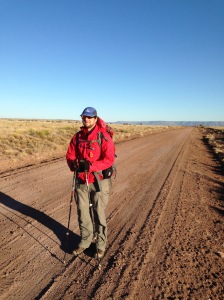
Elsye “Chardonnay” Walker, the first African American to achieve the Triple Crown, crossing the Gila River on the Continental Divide Trail in New Mexico. Courtesy Elsye Walker.
And a 2018 survey of 168 American university students (46 white, 43 black, 68 other races) published in Environmental Justice reported that, “None of the respondents say they are disconnected from nature. … The study found that black students prefer naturalistic landscapes more than urbanized settings and their perceptions of nature and landscapes mirror that of students of other racial and ethnic groups. None of the study respondents reported a generalized fear of nature either.”
Big Miles, Little Diversity
But when it comes to long-distance hiking, the stereotype hews much closer to reality.
Since 2016, The Trek’s annual survey of Appalachian Trail thru-hikers has included questions about race, finding that:
- 94 to 96 percent of AT thru-hikers identified as white.
- 2 percent self-reported as Hispanic or Latinx in 2019 and 2018, doubling the number from the previous two years.
- Hikers identifying as Asian made up less than 1 percent in 2016, but grew to 1.4 percent in 2019.
- Native American, Hawaiian, or other indigenous ethnicities have ranged from 0 to 1 percent, with a high of 0.8 percent.
- Those identifying as multi-racial have ranged from 0.4 to 1 percent.
- In three out of the four years, the survey picked up no hikers identifying as African American; the outlier is 2018, at just 0.3 percent. (That doesn’t mean they weren’t out there, only that their numbers were low enough that they were not captured by the survey sample.)
Anecdotally, hikers of all racial backgrounds confirm that non-white faces are few and far between on longer trails.
“Going into it, I knew I’d probably be in the minority,” says Amar “Bolt” Demeku-Ousman, 28, of Winnipeg, Canada, who hiked the AT in 2019. “I definitely wasn’t wrong. If I thought about it, I could probably count exactly how many people of color I saw.”

Amar Demeku-Ousman, aka Bolt, on the Appalachian Trail. Courtesy Amar Demeku-Ousman.
Given long-distance hiking’s reputation for dissolving differences on trail, some hikers question whether race should be considered differently than, say, economic background, education, or age. Many adopt a laissez faire approach, arguing that if people want to hike, they’ll hike, regardless of race.
People of color are out there, of course, including many who have become ambassadors for long-distance hiking. The Blackalachian is a hugely popular YouTuber; Will “Akuna” Robinson—the first African American male to hike the Triple Crown—has appeared in many videos for his sponsors; Rahawa Haile, aka Tsehay, has written for Outside Magazine; in 2009 Rue Mapp founded Outdoor Afro to organize outdoor activities for African Americans.
Open Arms

Rahawa “Tsehay” Haile, at McAfee Knob on the Appalachian Trail. Rahawa Haile photo.
The Trek recently spoke with several hikers of color about their experiences and diversity on trail.
Unsurprisingly, stories varied from hiker to hiker, with most reporting at least some uncomfortable moments on their hike. But all agreed that overall, their experiences with the hiking community itself—fellow travelers, trail angels, hostel owners and the like—were overwhelmingly positive.
“One of the most common sentiments one hears about the Appalachian Trail is how it restores a person’s faith in humanity,” Haile wrote in a 2017 piece for Outside. “It is no understatement to say that the friends I made, and the experiences I had with strangers who, at times, literally gave me the shirt off their back, saved my life. I owe a great debt to the through-hiking community that welcomed me with open arms, that showed me what I could be and helped me when I faltered.”
“Considering the general narrative right now, you would think it was a non-welcoming hobby. But for me, I’ve always had the opposite experience. I went out and had a great time and had no problems with anybody, racial or otherwise,” says Elsye Walker, aka Chardonnay, 49, the first African American to complete the Triple Crown.
“I don’t think I was treated any differently by a lot of people,” says Esperanza “Where’s My” Garcia, 36, who completed a flip-flop thru-hike of the AT with her husband in 2019. “Once you are out there, nothing matters, religion, politics, race. No one really cares.”
Town Frowns

Esperanza “Where’s My” Garcia on the Appalachian Trail. Courtesy Esperanza Garcia.
A second point of broad agreement: Uncomfortable situations most often occurred in town or, if on trail, with non-thru-hikers.
“My anxiety didn’t come from people on trail,” Demeku-Ousman says. “Except for one person, who I think must have had some mental issues, it was going into towns. … Grocery stores and restaurants were not necessarily used to seeing a random black guy with dreadlocks.”
In Massachusetts, he and his trail family stopped at a grocery store to resupply. While his white companions, a British man and a woman from the Netherlands, had no trouble signing up for a card to receive discounts, he was denied that privilege by a clerk. After some 20 minutes, a reluctant manager eventually granted him the discount.
“When I asked my tramily member if he wanted to use my card, he was like, ‘No, it’s fine, she gave me the pricing.’ He pointed to the same clerk who denied me,” Demeku-Ousman recalls.
White recalls an incident after he passed through Franklin, North Carolina, where another black hiker had been accused of stealing from a local hostel.

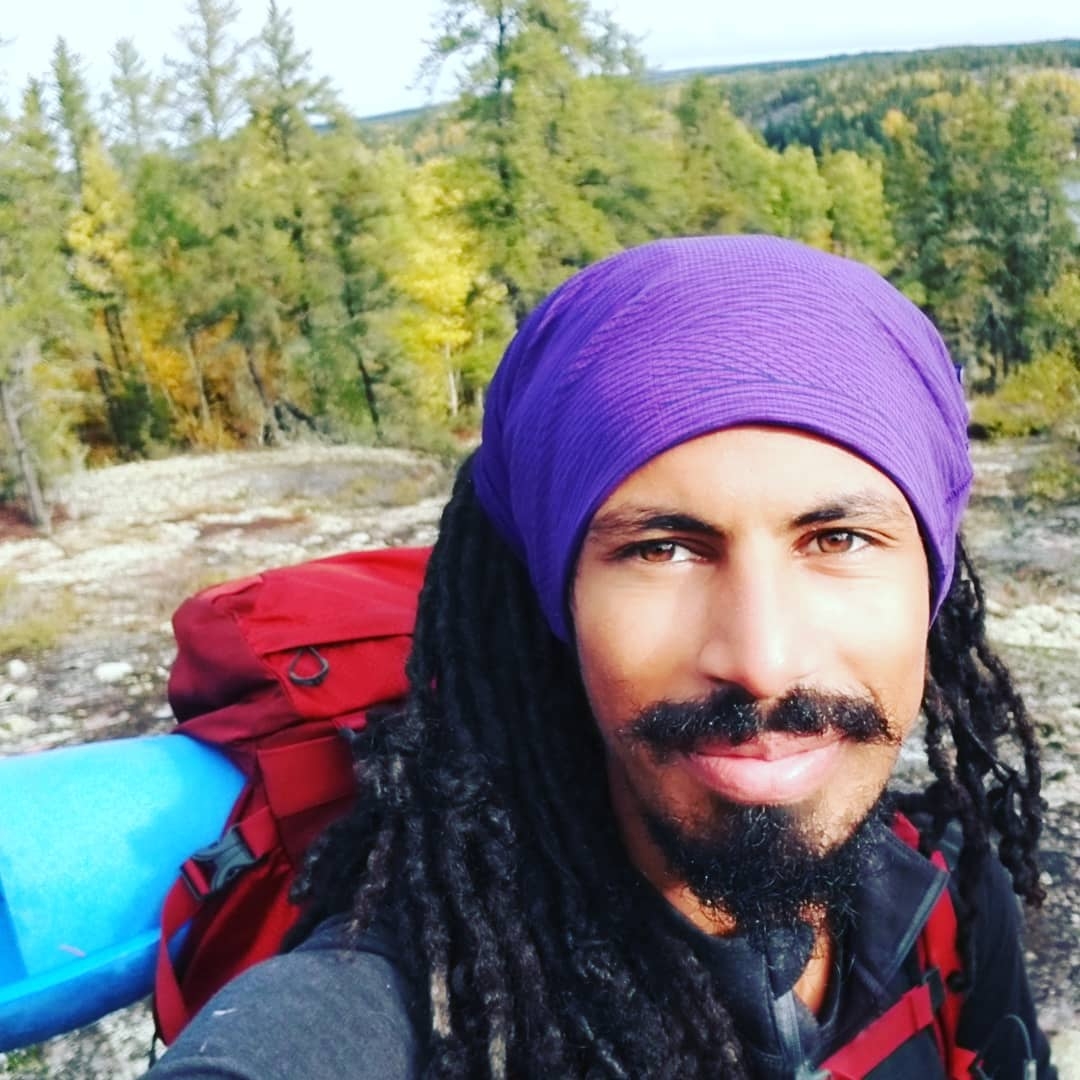
Daniel White, aka The Blackalachian. Courtesy Daniel White.
“Next thing I know, my picture ended up on a Facebook page, like I was the one who stole from the hostel,” White says. “I didn’t even know the other guy, and I had only stopped by for maybe five minutes, to pick up a package.”
In Klamath, Oregon, Robinson asked a man mowing his lawn about hotels in town. The man snapped, “We don’t have marijuana for you people here.”
“That’s not even close to what I was asking you,” he remembers thinking. “He just automatically assumed that a black man with dreadlocks was looking for weed.”
The Blackalachian: First Gold-Mouth Rapper to Thru-Hike the Appalachian TrailIn April of 2017, Daniel White, age 31, of Charlotte NC, trail name “The Blackalachian” , was dropped off at Amicalola Falls State Park to embark on a two month section hike that would inevitably turn into a complete through…Read More
And, counter to widely held cultural assumptions, many hikers of color have found that they experienced more hospitality and less hostility in the South than in the Atlantic region, New England, or Pacific Northwest.
“Coming from Canada, I definitely had anxiety and preconceived notions about the South,” Demeku-Ousman says. “Other than a few looks, people treated me with hospitality in the South that I didn’t find anywhere else on the trail. … The more north I went, the more issues I had. It was completely opposite of what I’d expected.”
Assumptions and Insults

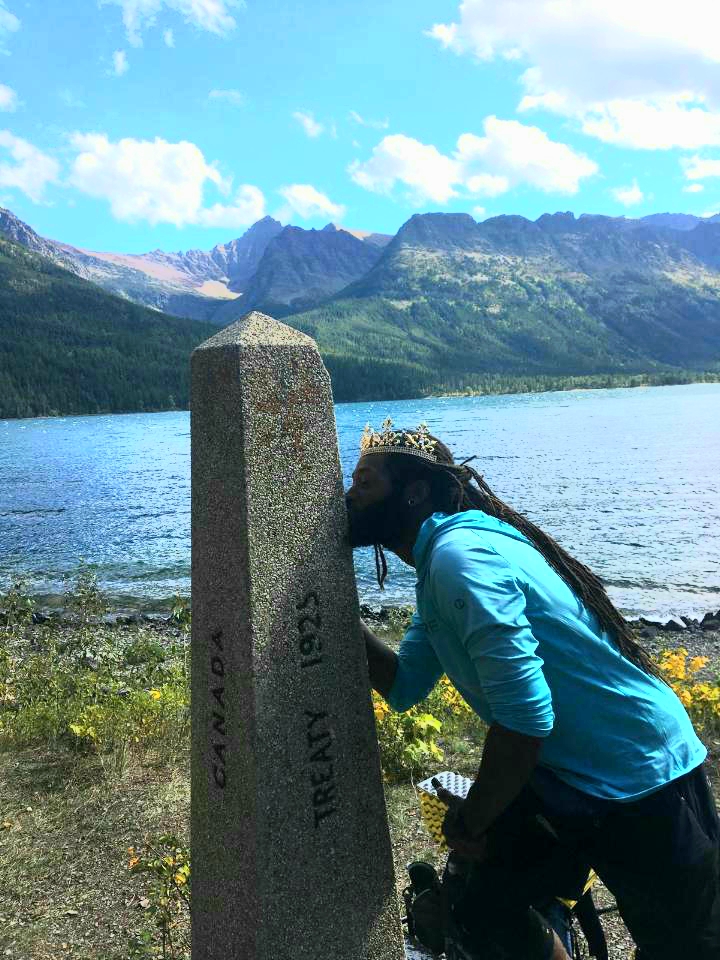
Will “Akuna” Robinson, the first African American male to complete the Triple Crown, at the Northern Terminus of the Continental Divide Trail. Courtesy Will Robinson.
While nobody said they felt actively threatened, some ran into people who made assumptions—sometimes overt, sometimes bizarre, sometimes merely clueless—because of their race.
Robinson was in Massachusetts when he approached an older white day hiker from behind. He let the man know he was coming up, whereupon the man barked, “What? Is football and basketball not enough for you people anymore?” and refused to make way for him to pass.
With a trailhead approaching, Robinson backed off. But the man continued to chatter, expounding on his belief that African Americans don’t belong in the backcountry, as they were more likely to require search-and-rescue or “burn down the woods.” But at the trailhead, the man recognized Robinson.
“Hey, I think my wife and daughter follow you on Instagram,” he asked. “Can I take a photo with you?”
“I told him in the politest way possible,” Robinson says, “to fuck off.”
In Georgia, the PCT veteran received a stream of unsolicited advice from a neophyte hiker. Only later did the hiker recognize, with considerable embarrassment, Robinson from his popular Akuna Hikes Instagram, and sheepishly apologize for his condescension.
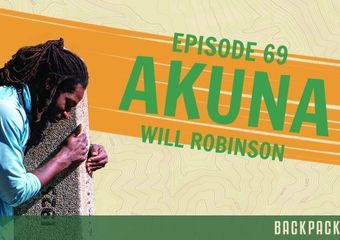
Backpacker Radio 69 | Will “Akuna” RobinsonIn episode 69, we are joined by Will Robinson, AKA Akuna. Akuna is an army veteran, the first known African-American male to complete the Triple Crown, and an all around awesome guy. We talk about his experiences in managing chronic…Read More
“Some people see a black figure on trail and they automatically assume you have no clue what you are doing,” Robinson says.
Some familiar signals of prejudice are subtle.
Karl “Papa Bear” Banks, 37, a section hiker who aspires to thru-hike the AT when he retires, was hiking toward Black Rock Hut in Shenandoah National Park when he approached three white women from behind. When he realized he was making them nervous, he backed off.

Karl “Papa Bear” Banks on the Appalachian Trail. Courtesy Karl Banks.
“My parents always made me aware that when you get those type of looks, leave the area or stay low-key. Don’t give anyone a reason to suspect you,” he says.
Only later at the shelter, after the women overheard him talking with other hikers about his military experience and speaking with his young son on Facetime, did they let down their guard and begin talking to him.
In response to such incidents, many hikers have developed thick skins.
“Did I see Confederate flags and Trump signs? Sure,” Walker says. “But to me those are just things; they can’t hurt me. I just let those things come in and go out of my life.”
“There is way more good on the trail than there is bad. I’m not going to let one bad apple ruin such an amazing experience for me,” Demeku-Ousman says.
Broadening the Appeal
Eyeing a demographic future in which non-white people will become a majority in the United States, organizations such as the Appalachian Trail Conservancy have set goals to increase racial diversity on trail.

Brittany Leavitt of Outdoor Afro, and an ATC Next Generation Advisory Council member, with fellow ATC Next Generation Advisory Council members Tony Richardson and Kristin Murphy at an ATC Summit Seekers event. Photo by McKenzie Grant-Gordon/ATC. Photo by McKenzie Grant-Gordon
One pillar of the ATC’s vision is to “engage and connect to a younger and more inclusive audience, broaden the understanding of the physical and mental benefits provided by the Trail, and cultivate the next generation to value and steward the Trail. As a mostly white, older organization this is a challenging goal.”
Challenging, but worthy, many hikers say.
“I definitely think it’s important to get more people of color out there, to increase the population who will protect natural resources and stand up for public land,” Robinson says. “If we want to have natural lands for the next generation, we need that diversity.”
Walker agrees, but hopes that the current lack of diversity won’t keep anyone from hiking.
“Getting more people interested in protecting our public lands is a good thing,” she says. “However, I believe it’s more important to encourage people of color to find and follow their passion. There will be challenges, racially or otherwise. Don’t let fear, demographics, or finances keep you from a transformative experience.”
There are many reasons people of color may not have embraced thru-hiking in numbers proportional to their populations.
“I’m often asked why are there few people of color hiking the trail,” says Derick “Mr. Fabulous” Lugo, author of the recent memoir, The Unlikely Thru-Hiker. “I can’t answer for the entire community, but I can give you reasons I have seen and experienced: financial, lack of knowledge, and lore.”

Derick Lugo, aka Mr. Fabulous, author of The Unlikely Thru-Hiker, at the summit of Katahdin. Courtesy Derick Lugo.
When it comes to lore, many African Americans, in particular, may have been taught by their families that going “out in the woods” is dangerous, based on brutal history.
“The way I was brought up, it was, don’t go into the woods because you could get lynched. Behind the house in Maryland where I grew up, my mother was always very adamant about me not going into the woods,” Banks says.
And yet, he notes, his grandmother was skilled at woodcraft, hunting, and fishing, and that prior to the “Great Migration” of 1916-70, in which some 6 million black people migrated from the rural South to cities in the North, Midwest, and West, most were deeply in tune with outdoor environments.
“We really are country bumpkins,” Banks says. “It wasn’t until we moved to the city that we abandoned our outdoor roots.”
Gearing up for a 2,000-mile hike can also be expensive.
“Especially for something like a thru-hike, it costs a lot. Even though you are living in the woods, that shit costs money,” Garcia says. “We spent a lot more we thought we would.”
Getting the Word Out
Many hikers of color come to long-distance hiking the way a lot of people do, through books, movies, or YouTube videos. Still, many aren’t aware that such a thing even exists.
“What is most disheartening is that within the black community is that our lack of education, culture, and history by default exempts us from experiencing the outdoors,” Banks says. “Hell, I’ve had people in my race look at me as a pink elephant with white polka dots, wearing a tutu and walking on a high wire. Several have told me that I was crazy for being in the woods.”
Organizations are seeking to change that through education and outreach. The ATC’s “MyATStory” video series, for example, documented a group of inner-city students who hiked every mile of the AT in their home state of New Jersey as part of their graduation plan.

Appalachian Trail Conservancy.
“The efforts to increase diversity are trending in the right direction,” Robinson says. “From 2016 to this year, there are way more people of color. It’s still not a big percentage, but it’s more every year. And the more exposure there is, the more likely people of color are to see it and become interested.”
And, as Lugo writes in his memoir, “Diversity has not yet reached the AT, although the trail does seem ready, wide-eyed and with open arms.”







 The Great Plains Trail